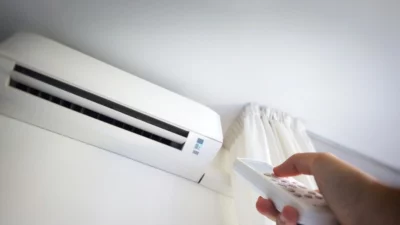


Would ductless mini splits make sense for your home?
It’s fall in New England. The windows are open. The AC is finally getting a break. And for a few glorious weeks, your house may not need much heating or cooling at all.
But if you spent the summer dealing with hot bedrooms, window AC units, an aging central air system, or an addition that never seemed comfortable, this in-between season is a good time to think about what comes next.
And there’s an important question to ask before you simply replace or add central air: Would ductless mini splits make sense for your home?
The answer depends on much more than which system cools better. Mini-split heat pumps can provide both air conditioning and heating, making this a year-round decision—especially when another Massachusetts winter is right around the corner.
Let’s look at how the two options compare and, more importantly, which types of homes each one may suit best.

First: What's the Difference Between a Mini-Split and Central Air?
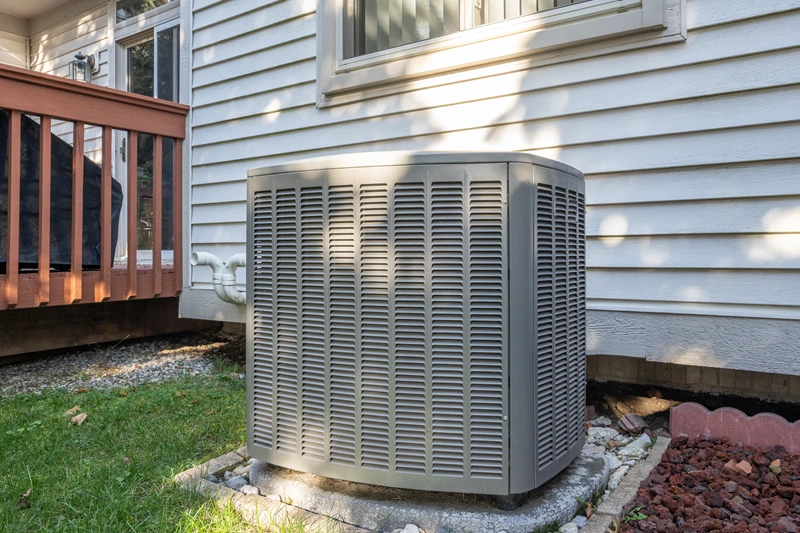
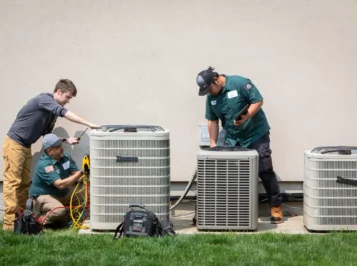
Traditional central air conditioning uses one central system to cool air and distribute it throughout the home using ductwork. If you already have a forced-air furnace, central AC may be able to use the same ducts.
A ductless mini split works differently.
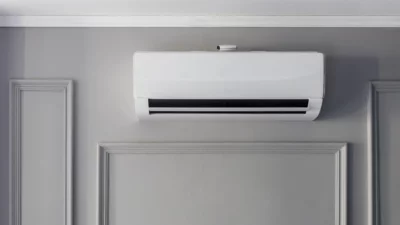
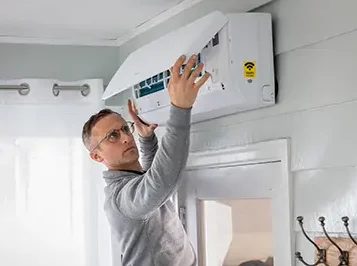
Mini splits are air-source heat pumps. They typically consist of an outdoor unit connected to one or more indoor units mounted on a wall, ceiling, or other location. Instead of sending conditioned air through a network of ducts, each indoor unit directly heats or cools the area it serves.
And that’s the first major difference homeowners should understand:
Central AC provides cooling. A mini-split heat pump provides heating and cooling.
During summer, a mini split transfers heat from inside your house to the outdoors. When fall turns into winter, the process reverses, transferring heat from the outdoor air into your home.
So while you may start your research looking for a better way to cool your home next summer, a mini split could change how you heat it this winter, too.
Mini Splits vs. Central Air at a Glance
Central Air May Make Sense If:
- Your home already has ductwork in good condition.
- You want consistent, whole-home cooling from a central system.
- You prefer not to have visible indoor HVAC units in individual rooms.
- Your current heating system already uses forced air, and you aren’t looking to change how you heat your home.
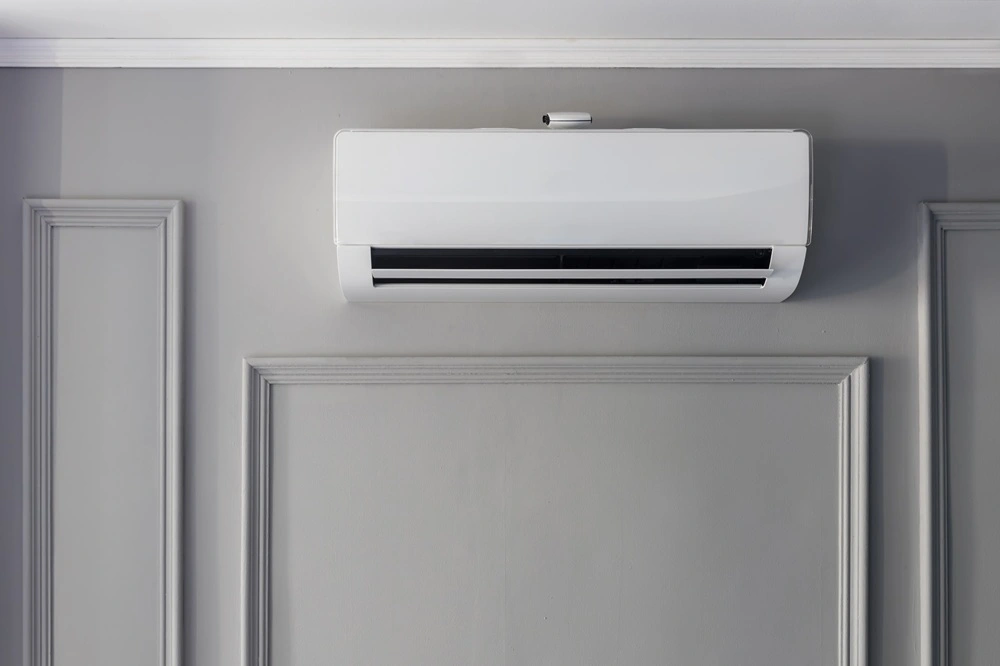
Mini-Splits May Make Sense If:
- Your home doesn’t have existing ductwork.
- You currently heat with radiators, baseboards, oil, propane, or electric resistance.
- You want both heating and cooling from the same equipment.
- Certain rooms or floors are consistently too hot or too cold.
- You want more control over the temperature in individual areas.
- You’re cooling an addition, finished attic, converted garage, home office, or another space that isn’t well served by the existing HVAC system.
But in New England, the house itself often tells us much more than a simple pros-and-cons list.
If You Have an Older New England Home Without Ductwork
Picture a Massachusetts Colonial with hot-water radiators or baseboards.
It may have kept generations of families warm, but central air conditioning probably wasn’t part of the original floor plan.

Adding central AC to a house without ducts can become a substantial project. Ductwork needs somewhere to go, which may mean using attic or basement space, closets, soffits, or opening finished areas of the house.
That’s one reason ductless mini-splits have become particularly useful in older New England homes.
Refrigerant lines connect the outdoor equipment to indoor units, eliminating the need to build a traditional whole-house duct network. You gain air conditioning during summer and another heating option during winter without redesigning the house around ductwork.
For a homeowner who has been relying on window units every summer because “this house just wasn’t built for central air,” a mini split can open up a very different conversation.
Plus, through Mass Save®, you may qualify for up to $8,500 in heat pump rebates and 0% financing up to $25,000 through the Mass Save HEAT Loan.
If Your Home Already Has Central Air
Here’s where the decision gets more interesting.
If you already have central AC and your ductwork is appropriately sized, sealed, insulated, and in good condition, another ducted system may be the most natural fit.
But that doesn’t necessarily mean you have to buy another air conditioner.
A ducted air-source heat pump can use ductwork to distribute both heating and cooling throughout the home. In other words, homeowners who like the whole-house feel of central air can still consider heat-pump technology without installing wall-mounted mini-splits throughout the house.
If your AC is getting older—particularly if your heating equipment is aging, too—it’s worth comparing:
Traditional central AC + your existing heating system
vs.
A ducted heat pump providing central heating and cooling
And if you have a relatively new furnace but an aging AC system, a heat pump can sometimes be paired with the furnace in a dual-fuel configuration.
The right answer depends on the equipment you already own, its condition, your home’s heating and cooling needs, and your long-term plans.
If You Have an Addition or One Room That's Never Comfortable
New England houses tend to evolve.
A sunroom gets enclosed. An attic becomes a bedroom. A garage gets a bonus room above it. Someone adds a family room onto the back of the house. A spare bedroom becomes a home office.
But the original HVAC system doesn’t always evolve with the floor plan.
Extending ductwork may be difficult or may not provide enough capacity to condition the new space properly. A ductless mini split can give that area its own heating and cooling without requiring major changes to the rest of the house.

That can also be useful for persistent hot and cold spots, such as an upstairs bedroom that never quite matches the temperature downstairs.
Before assuming you need additional HVAC equipment, however, it’s worth determining why the space is uncomfortable. Poor insulation, air leakage, undersized ductwork, or other issues can also be part of the problem.
If You Want Different Temperatures in Different Parts of the House
Here’s another advantage of ductless systems: zoning.
Each indoor unit controls the area it serves. That means you may be able to keep the home office comfortable during the workday without conditioning unused bedrooms to exactly the same temperature.
For families whose comfort preferences differ—or homes where certain rooms are used much more frequently than others—that flexibility can be valuable.
Central systems can also be designed with zoning, but traditional central AC typically conditions the home through a shared duct system controlled from a central thermostat.
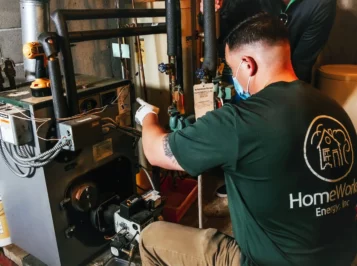
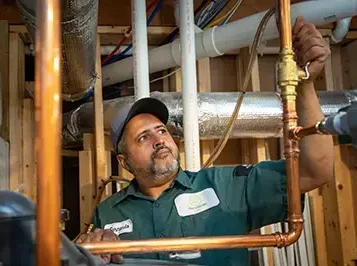
Services We Provide in Massachusetts


Can Ductless Mini Splits Really Heat a Massachusetts Home in Winter?
This is where outdated perceptions about heat pumps can cause confusion.
Modern cold-climate heat pumps are specifically designed to operate efficiently at low outdoor temperatures. Today’s qualifying cold-climate equipment is tested for performance at 5°F and continues operating below that temperature.
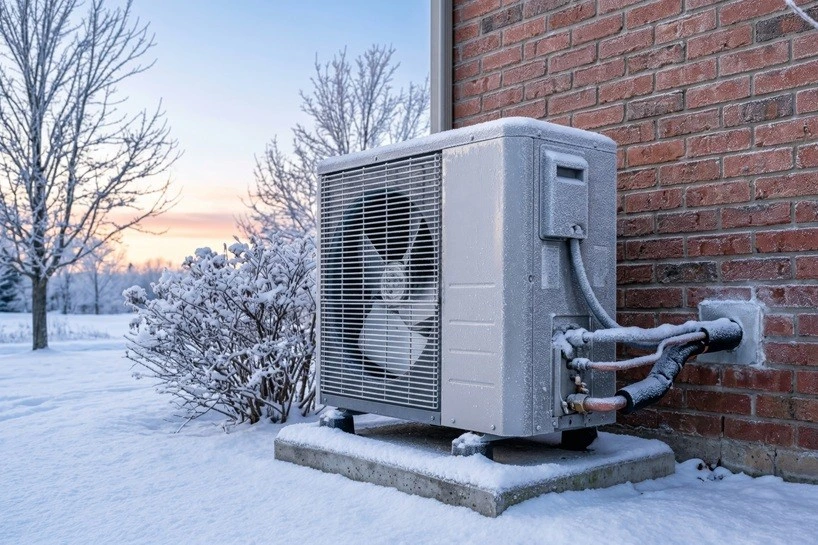
That doesn’t mean every mini split should automatically become the sole heating source for every Massachusetts house.
Equipment selection, system design, sizing, insulation, air leakage, floor plan, and the home’s heating load all matter.
Depending on the house, a heat pump may:
- Provide whole-home heating and cooling.
- Heat and cool specific zones.
- Supplement an existing furnace or boiler.
- Reduce reliance on an older or more expensive heating source.
That’s why choosing equipment based solely on square footage—or simply installing the biggest system available—isn’t the right approach.
Bigger Isn't Better
Whether you’re considering central air, a ducted heat pump, or ductless mini splits, proper sizing matters.
HomeWorks Energy’s local HVAC experts can calculate how much heating and cooling your home actually requires rather than relying on a rough square-footage estimate.
That calculation considers characteristics such as the home’s size and layout, windows, insulation, air leakage, orientation, and local climate.
An oversized system isn’t automatically more comfortable. Equipment that isn’t properly matched to the home can affect efficiency, humidity control, equipment life, and overall comfort.
And that brings us to something homeowners sometimes overlook when shopping for HVAC equipment.
Before You Choose an HVAC System, Look at the House Around It
Your heating and cooling equipment is only one part of your home’s comfort system.
If your attic is under-insulated, air is leaking through gaps and penetrations, or your ducts are leaking conditioned air into the attic or other unconditioned spaces, your HVAC system has to compensate.
Improving insulation and air sealing can reduce the amount of heating and cooling your home needs in the first place. It may also affect the size and design of the HVAC system that’s appropriate for your house.
A no-cost Mass Save® Home Energy Assessment can help identify insulation and air-sealing opportunities and provide personalized guidance about improvements and incentives that may apply to your home.
Think of it this way: Before deciding how to heat and cool your house, it helps to know how well your house holds onto that heating and cooling.
So, Are Mini-Splits Better Than Central Air?
Not necessarily—and that’s actually the point.
A Massachusetts homeowner with an older radiator-heated Colonial may come to a very different conclusion than someone living in a newer home with excellent ductwork.
The best solution could be:
- Traditional central AC
- A ductless mini-split heat pump
- A multi-zone mini-split system
- A ducted central heat pump
- A combination of ducted and ductless equipment
- A heat pump paired with an existing heating system

The goal isn’t to choose the technology that’s “best” in general. It’s to find the heating and cooling setup that makes sense for your house, your comfort, and how your family actually uses the space.
Fall Is a Good Time to Think Beyond Ahead
Right now, air conditioning may be the last thing on your mind.
But if your AC struggled through the summer—or you’re tired of hauling window units in and out every year—fall gives you an opportunity to think about the problem.
And because mini splits provide heating as well as cooling, you don’t have to wait until next summer to benefit from the upgrade.
HomeWorks Energy offers free HVAC replacement consultations to help Massachusetts homeowners understand their options. We’ll look at your existing heating and cooling equipment, ductwork, home layout, comfort concerns, and goals to help determine whether central air, ducted or ductless heat pumps, or another solution makes sense.
Enjoy the open-window weather while it lasts. Then make sure your home is ready for whatever New England sends our way next.